Monday, February 12, 2018

Australian garden orb weaver spider


Hello Reader,


You can look around the world and you will find one of these big famili. This is one you can see every day. Let’s talk about a old friend of everybody, the garden orb weaver spider.

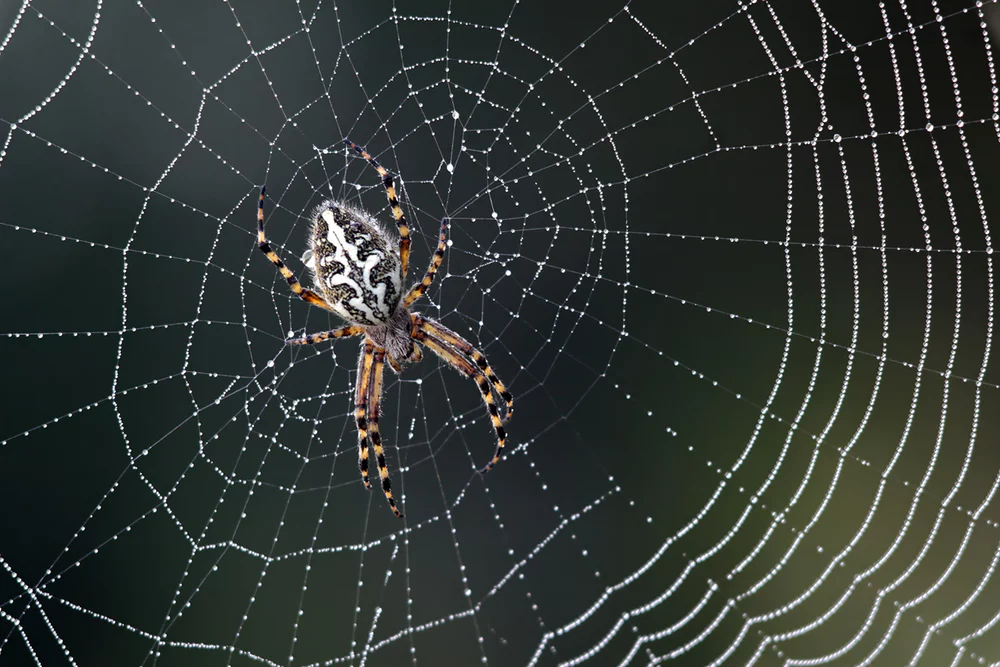


She construct her web in the middle of branches and trees, spots with a open space that insects likely fly. If they got a lot of food they don’t risk training to caught a large prey and is common to release them from the weeb to avoid an unnecessary confrontation and big lost of web.


Web is a recurso that cost a lot for a spider, so much that they normally eat the web when they switch the places of hunt. And some species can even create a 2 meters web.


This is a spider who don’t live long lives. They hach between autumn and winter, getin the maturity in summer, between summer and autumn they lay the eggs and the female normally die in the end of autumn beginning of winter.


During the time of reproduction the male have a chance to escape after the copulation, but in the second female is almost certain he will become diner. Was seen that males who jump off the copulation early have less success in the relative paternity, surviving for another chance. But the males who jump early are related wit the female (siblings) and doing this increase the chance that the second female will be a non-kin, making the copulation longer, guaranteeing their paternity, but also losing their lives.


The Female is 9 times larger than the male. Been small increase their chance of don’t be eating in the firsts steps in the web, since a small size can indicate low nutritional value and can help in don’t be seen until he gets in the right spot to begun the serenade vibrating the web.


They came in several colors and a variation in size. All have a venom, but nothing to threaten to humans, even so you can have pain and other symptoms during 3 hours, but this depends on person to person . People who are more sensitive to bits need to search for medicine help. The biggest threat it is you are walking in the night and stomb in one of their webs, if you have more than 50 years you can have a heart attack when see the spider walkin in your face.


The garden orb weaver spider is normally nocturne, and will hide during the day to avoid predators, but if is in a while without getting food she will risk stay in the web during the day. Some spider will eat the web before go hide, other have a hiding spot near the web so they just leave the web during day and retur during night. 


Kingdom> Animalia
 Phylum> Arthropoda
  Class> Arachnida
   Order> Araneae
    Suborder> Araneomorphae
     Superfamily> Araneoidea
      Family> Araneidae
       Genus> Eriophora


~Catch you later


References:
http://www.australiangeographic.com.au/topics/wildlife/2012/08/australian-spiders-the-10-most-dangerous/
https://australianmuseum.net.au/garden-orb-weaving-spiders
https://en.wikipedia.org/wiki/Orb-weaver_spider
https://en.wikipedia.org/wiki/Australian_garden_orb_weaver_spider
http://animaldiversity.org/accounts/Eriophora/classification/
http://www.spiders.com.au/garden-orb-weaving-spider.html
http://www.minibeastwildlife.com.au/resources/garden-orb-weavers/


Welke KW, Schneider JM. Males of the orb-web spider Argiope bruennichisacrifice themselves to unrelated females. Biology Letters. 2010;6(5):585-588. doi:10.1098/rsbl.2010.0214.
https://www.ncbi.nlm.nih.gov/pmc/articles/PMC2936157/

Sunday, February 11, 2018

False stonefish


Hello Reader,


Some fish have biofluorescence, and this one is in the list. Greetings to the false stonefish.


The biofluorescence probably is used in communication with other from the same species, and assist in their camouflage, sins the corals also have biofluorescence.


Unlike the real stonefish who have 13 venomous spines the false stonefish have 12, but still have the dangerous venom. And like the stonefish they wait for the prey came to the range of atack. The false stonefish prefers walking to swimming. Sometimes they even get covered with sediment.


Kingdom> Animalia
 Phylum> Chordata
  Subphylum> Vertebrata
   Class> Actinopterygii
    Order> Scorpaeniformes
     Family> Scorpaenidae
      Genus> Scorpaenopsis
       Species> S.diabolus


~catch you later


References:
https://en.wikipedia.org/wiki/Scorpaenopsis_diabolus
http://journals.plos.org/plosone/article?id=10.1371/journal.pone.0083259
http://animaldiversity.org/accounts/Scorpaenopsis_diabolus/classification/
https://australianmuseum.net.au/false-stonefish-scorpaenopsis-diabolus
https://www.thainationalparks.com/species/false-stonefish
Bray, D.J. 2017, Scorpaenopsis diabolus in Fishes of Australia, accessed 12 Feb 2018, http://fishesofaustralia.net.au/home/species/2124


https://www.youtube.com/watch?v=ohiVhdM-OI4

Redback

Hello Reader,

Look out for the spider who cames to you house, because this one lick the environment that humans provides. But is a dangerous one to have at home and you probably will not want this spider. The Redback (Latrodectus hasselti).


The redback can be found in a large range in Australia. More common see one passing by in the summer.


Normali is the female you will notice sins she is bigger than the male and have the red marc in the abdomen more distacade than the male. Not all redbacks will have the color red, they can be on the color orange. Onli the female produce web, and the male can be found in the border of the web, training to get some leftovers.


The redback spider have one of the most dangerous venoms to humans, the pain can last for weeks if don’t kill in the middle. But luckily they have small fangs, with macke difficult to give a proper bite in something bigger than them. Normali they will beat their prey in a more soft spot, and to do that sometimes just let the victim struggle wen hitch in the web until lost the strength. They have a control in the amount of venom used in the bite, making them capable of give a dry bite.


Dispait har shorts fangs they still can get some larges food like small mauses, lizards and rarely snakes if them get stuck in her web.


The web look like a mess, but even been a irregular tangle have a strategically position that gives to the spider a good range to capture food. 


Kingdom> Animalia
 Phylum> Arthropoda
  Class> Arachnida
   Order> Araneae
    Family> Theridiidae
     Genus> Latrodectus
      Species> L. hasselti


~Catch you later

References:
http://www.australiangeographic.com.au/topics/wildlife/2016/03/hidden-housemates-the-redback-spider
http://animaldiversity.org/accounts/Latrodectus_hasselti/
http://www.spiders.com.au/red-back-spider.html
https://australianmuseum.net.au/redback-spider
http://www.australiangeographic.com.au/topics/wildlife/2012/08/australian-spiders-the-10-most-dangerous
https://en.wikipedia.org/wiki/Redback_spider

https://www.youtube.com/watch?v=1MoKmY-jofw
https://www.youtube.com/watch?v=qvzmvY6Ksf0

Friday, February 9, 2018

Painted Button-Quails


Hello Reader,


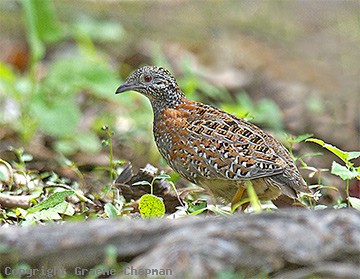
Normali in the animal kingdom you will see a male doing the call for females and protecting a territory, men while the female take care of the offspring. But note this one. They switches places in the chores. I am talking about the Painted Button-Quails (Turnix varius).


The Painted Button-Quails is endemic of Australia.


The female is the one who will keep a territory and have more than one partner. She calls for the males, lay their eggs (between 3-5), and leave the part of caring for the yongs with the male. The female is bigger than the male, and during the courtship she even offer food to the male.


The male will incubate the eggs during 15 day, and will care for them after hatching more 16 days, when they will be group enough to take care from themselves.


It is a bird that aviators created, but is not recommended if you are a total inicant. They can be see like a control pest population of insects.


Kingdom> Animalia
 Phylum> Chordata
  Class> Aves
   Order> Charadriiformes
    Family> Turnicidae
     Genus> Turnix
      Species> T. varius


~Catch you later


References:
http://www.graemechapman.com.au/library/viewphotos.php?c=736
http://datazone.birdlife.org/species/factsheet/62288672
http://birdcare.com.au/painted_button_quail.htm
http://www.birdsindanger.net/pdfs/Painted%20Button-quail%20(Houtman%20Abrolhos).pdf
http://www.environment.gov.au/cgi-bin/sprat/public/publicspecies.pl?taxon_id=82451
https://en.wikipedia.org/wiki/Painted_buttonquail
http://animaldiversity.org/accounts/Turnix_varius/

Wednesday, February 7, 2018

Stonefish (Synanceia)


Hello Reader,


I bring a thought fish. He can survive out of the water for 24h, have the most deadly venom and you can esly mistake him with a rock.


The stonefish have spines over they back, it is in thous people steps accidentally. They have a tissue that incover the spine, and when that finc in something and the tissue is pushed down squises the venom aut.


The venom of the stone fish is deadly and each of the 13 spines can delivery it, but luckily if you have a water hoten the 45ºC you can help diminish the venom. The venom of him is destroyed in high temperature, but it can’t be a temperature that hurt the person. But you still needed to go quickly to receive the antivenom.


The ability of stay out of water for 24h is related to the fact this fish just stay put and wait for they victims. Been stil even if the mare start to goin down and they can get stuck in a pond or even stay in a place where the water retreats totally. How normally in less than 24h the mare get bec, the fish can stay in the same place and just wait, food will came together with the water.


Kingdom> Animalia
 Phylum> Chordata
  Order> Scorpaeniformes
   Family> Synanceiidae
    Genus> Synanceia


References:
https://en.wikipedia.org/wiki/Synanceia_verrucosa
http://animaldiversity.org/accounts/Synanceia/classification/#Synanceia
http://otlibrary.com/stonefish/
https://australianmuseum.net.au/reef-stonefish-synanceia-verrucosa-bloch-schneider-1801


https://www.youtube.com/watch?v=I8yJkIuvPvM

Huntsman spiders


Hello Reader,


Hunting dreams, I bring today the Huntsman spider. Her size can scar people, and having that jumping in you is more than terrifying.

Nenhum texto alternativo automático disponível.


Far spread in the world, the family of Sparassidae is well know. And all this family instead of build webs and wait for the food they go after it, hunting. What can make one enter your house just to check if it is not a delicious cocorouth around, or any other insect with the right size to catch.


But even the hunter go attacking their prey, they don’t attack humans for free. This spiders prefer to run instead of confront the atacar. And if the atacant is a hand, they don’t see the human been part of the hand, so it can make them just jump in the direction of the big body training to scape the hand.


It is like another spider misunderstood, the camel spiders (order Solifugae). It was belief they go after humans in the desert. Camel spider, like the huntsman spider, are fast and big what cause the mits about a spider in the desert eating an arm from a person. But all that spider is doing is just get shelter from the sun in the closest shadow, and what is better than a moviment shadow to go after your next meal in the desert?


And both spider don’t have a harmels venom, just a painful bit. The camel spider don’t have venom at all. But the huntsman spider have venom, just is not the type that can do some damage in humans.


Huntsman spider

Kingdom> Animalia
 Phylum> Arthropoda
  Subphylum> Chelicerata
   Order> Araneae
    Infraorder> Araneomorphae
     Family> Sparassidae


Camel spider

Kingdom> Animalia
 Phylum> Arthropoda
  Subphylum> Chelicerata
   Class> Arachnida
    Order> Solifugae


~Catch you later


References:
http://www.australiangeographic.com.au/topics/wildlife/2012/08/australian-spiders-the-10-most-dangerous
http://www.spiders.com.au/huntsman-spider.html
http://www.minibeastwildlife.com.au/resources/huntsman-spiders/
https://en.wikipedia.org/wiki/Solifugae
http://animaldiversity.org/accounts/Sparassidae/classification/

https://www.youtube.com/watch?v=0I6UEV4MacA

Tuesday, February 6, 2018

Phocoena dioptrica


Hello Reader,


Looking in a list of marine animals from Australia, I found the Spectacled porpoise.


This creature is found in a good part of the Antarctic Circumpolar Current , and there was a register in south Australia of them.


Infortunately, little is know about this specie of Porpoise, because they run from boats. The majority of registers about the species is from cativets ones. In fact the firth report of this species came from a dead body founded in the shore, in 1912.


What can make you wander, how many exist from this creature? No one know. Exist to little data about them to estimate a population.


They have a easy way to distinguish the male from female by the dorsal fin, the male have it in a biggest size. 


Don’t let their faces trick you. They are related with whales and dolphins, but they are porpoises. Even been close related with dolphins and having small size they are described like been little whales with spade-shaped teeth (dolphins have a conical teeth).


Phylum> Chordata
 Class> Mammalia
  Order> Artiodactyla
   Infraorder> Cetacea
    Family> Phocoenidae
     Genus> Phocoena
      Species> P. dioptrica