Showing posts with label Arthropoda. Show all posts

Friday, April 27, 2018

Wolf spider


Hello reader,


Members of the family Licosidae are spread in the world, been commonly named Wolf spider. With so vast diversity of colors and sizes the best way to recognized one is by their big eyes of the front with four smalls above and more two separate in the top.
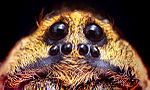

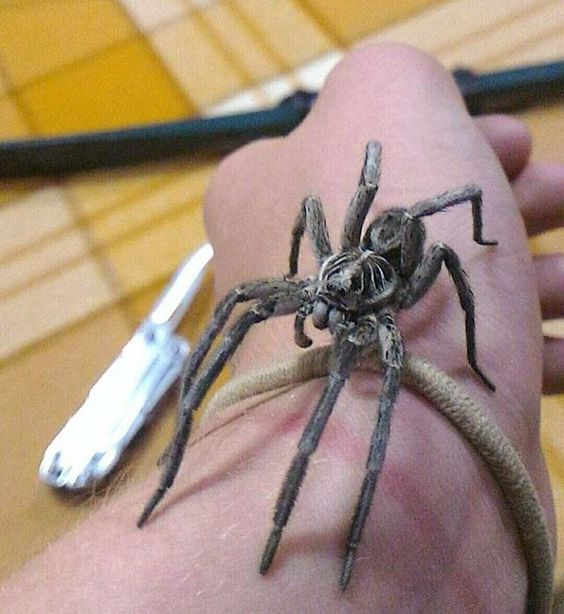


There have a good sight thanks to those big eyes, making them a good hunter. They don’t spin a web, and like the huntsman they go after their food. It don’t go after only bugs, incredibly this spider can hunt frogs and toads, but not only that, this spider even dive in the water and catch small fish.


It is more common they be walkers,but some create a burrow that can have or not a door. They really in their vision to do a hunting, but they also use the sensitive legs to know from where is coming a moviment when they stay in the burrow. When they left the burrow at night to hunt if it has a door this stay opened until the spider returns.


Another easy way of recognise them is if you see one carrying a sac, more specifically a female carries a circular sac attached on her spinnerets. When the eggs eclode the spiderlings stay in her back until the change of skin then they disperse by ballooning or walking. The mother helps breaking the sac to the youngs climb her, is a rare parentcare in the spider’s world, she protect the sac and the youngs in her back with her life.
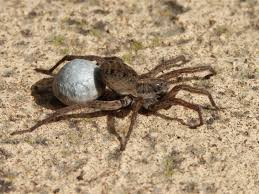
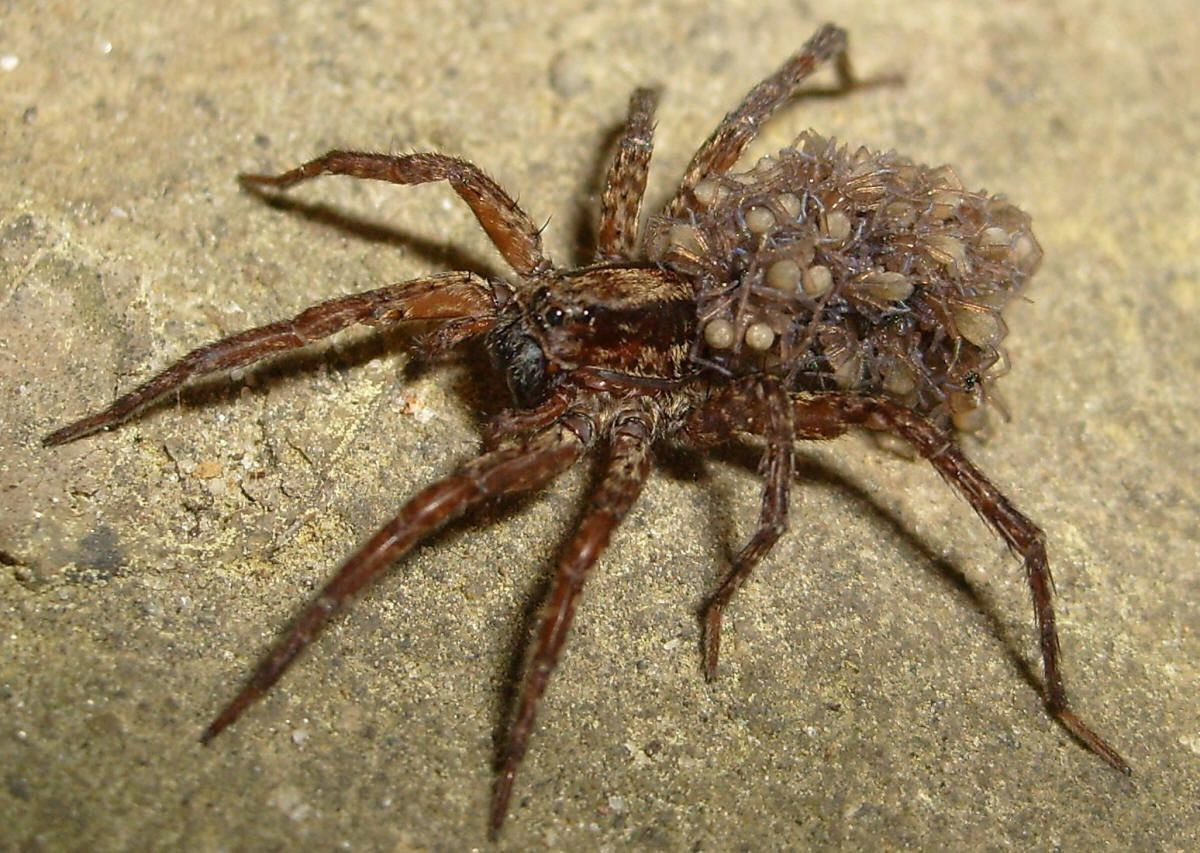


The wolf spider is not exactly dangerous, but a bite can cause a lot of local pain and if the symptoms persist you need to go to a hospital. Normally the spider don’t inject venom unless be continuous provoked. This is another spider with a mit of necrosis, that don’t happened.


Kingdom> Animalia

Monday, April 2, 2018

Black House Spiders


Hello Reader,


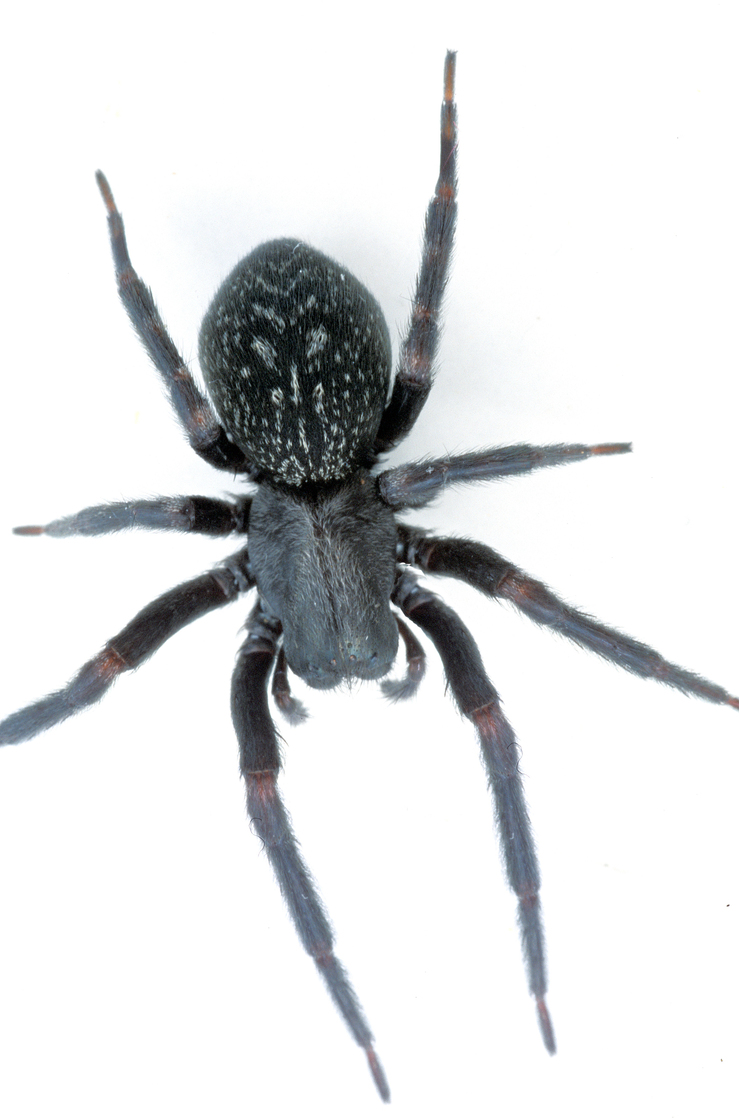
The spider of today can stay in the same spot until your day of death. The Black house spider is not exactly dangerous, her venom can cause a lot of pain and some minors unwell symptoms, unless you are allergic, then it can kill you. Generally is a sweet spider, and don’t bite unless provoked.


The black house spider normally built her web in places that have something shine to attract insects, thats is way it receives also the name window spiders, the bright of window attract insects what makes a perfect place to construct a home.


The web can have a funnel forme, makyn people thinking is a funnel-web spider, but the web is more messy, and don’t stays in a burrow. The black house spider lives in the same web and will just put more silk in the same, makin some old ones look more gray, unless something force them to move for then the spider will build a new web in a new place.


Differently of the other spiders, when a male make sure the female is receptive they will stay together for some days and mate several times.


The female guard the sacs of eggs until they hatch and disperse. Some will stay in the weeb of the mother during a time, eating small prey that the bigger spider ignore before leaving and starts its own web.


Kingdom> Animallia
 Phylum> Arthropoda
  Class> Arcahnida
   Order> Araneae
    Family> Desidae
     Genus> Badumna
      Species> B. insignis


~Catch you later

References:
http://www.spiders.com.au/black-house-spider.html
https://en.wikipedia.org/wiki/Black_house_spider
https://australianmuseum.net.au/black-house-spider-badumna-insignis
http://www.scienceimage.csiro.au/tag/spiders/i/2019/adult-black-house-spider/

Monday, February 12, 2018

Australian garden orb weaver spider


Hello Reader,


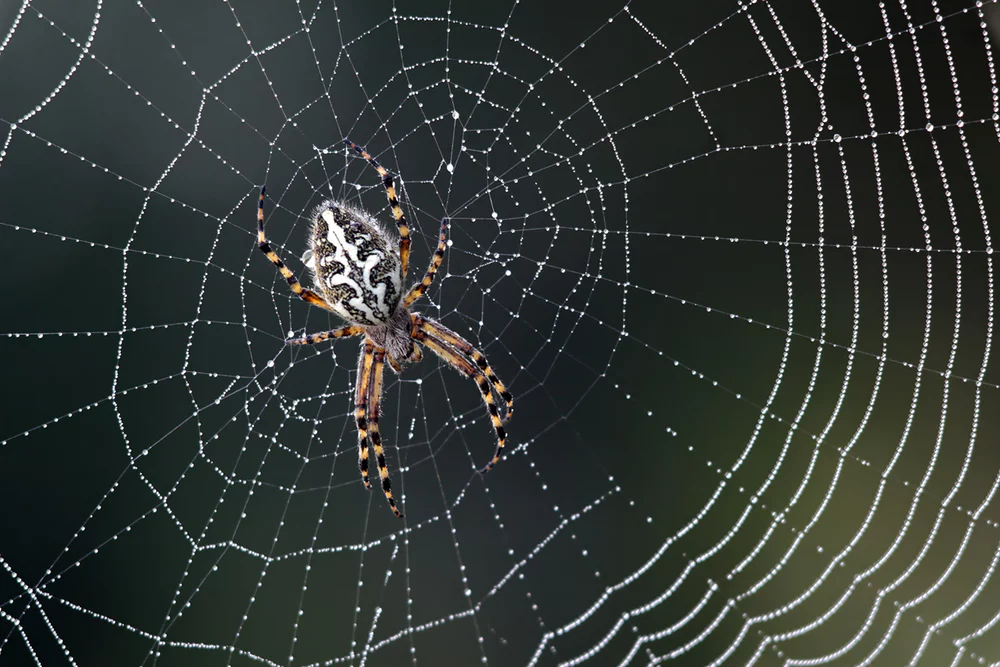
You can look around the world and you will find one of these big famili. This is one you can see every day. Let’s talk about a old friend of everybody, the garden orb weaver spider.


She construct her web in the middle of branches and trees, spots with a open space that insects likely fly. If they got a lot of food they don’t risk training to caught a large prey and is common to release them from the weeb to avoid an unnecessary confrontation and big lost of web.


Web is a recurso that cost a lot for a spider, so much that they normally eat the web when they switch the places of hunt. And some species can even create a 2 meters web.


This is a spider who don’t live long lives. They hach between autumn and winter, getin the maturity in summer, between summer and autumn they lay the eggs and the female normally die in the end of autumn beginning of winter.


During the time of reproduction the male have a chance to escape after the copulation, but in the second female is almost certain he will become diner. Was seen that males who jump off the copulation early have less success in the relative paternity, surviving for another chance. But the males who jump early are related wit the female (siblings) and doing this increase the chance that the second female will be a non-kin, making the copulation longer, guaranteeing their paternity, but also losing their lives.


The Female is 9 times larger than the male. Been small increase their chance of don’t be eating in the firsts steps in the web, since a small size can indicate low nutritional value and can help in don’t be seen until he gets in the right spot to begun the serenade vibrating the web.


They came in several colors and a variation in size. All have a venom, but nothing to threaten to humans, even so you can have pain and other symptoms during 3 hours, but this depends on person to person . People who are more sensitive to bits need to search for medicine help. The biggest threat it is you are walking in the night and stomb in one of their webs, if you have more than 50 years you can have a heart attack when see the spider walkin in your face.


The garden orb weaver spider is normally nocturne, and will hide during the day to avoid predators, but if is in a while without getting food she will risk stay in the web during the day. Some spider will eat the web before go hide, other have a hiding spot near the web so they just leave the web during day and retur during night. 


Kingdom> Animalia
 Phylum> Arthropoda
  Class> Arachnida
   Order> Araneae
    Suborder> Araneomorphae
     Superfamily> Araneoidea
      Family> Araneidae
       Genus> Eriophora


~Catch you later


References:
http://www.australiangeographic.com.au/topics/wildlife/2012/08/australian-spiders-the-10-most-dangerous/
https://australianmuseum.net.au/garden-orb-weaving-spiders
https://en.wikipedia.org/wiki/Orb-weaver_spider
https://en.wikipedia.org/wiki/Australian_garden_orb_weaver_spider
http://animaldiversity.org/accounts/Eriophora/classification/
http://www.spiders.com.au/garden-orb-weaving-spider.html
http://www.minibeastwildlife.com.au/resources/garden-orb-weavers/


Welke KW, Schneider JM. Males of the orb-web spider Argiope bruennichisacrifice themselves to unrelated females. Biology Letters. 2010;6(5):585-588. doi:10.1098/rsbl.2010.0214.
https://www.ncbi.nlm.nih.gov/pmc/articles/PMC2936157/

Sunday, February 11, 2018

Redback

Hello Reader,

Look out for the spider who cames to you house, because this one lick the environment that humans provides. But is a dangerous one to have at home and you probably will not want this spider. The Redback (Latrodectus hasselti).


The redback can be found in a large range in Australia. More common see one passing by in the summer.


Normali is the female you will notice sins she is bigger than the male and have the red marc in the abdomen more distacade than the male. Not all redbacks will have the color red, they can be on the color orange. Onli the female produce web, and the male can be found in the border of the web, training to get some leftovers.


The redback spider have one of the most dangerous venoms to humans, the pain can last for weeks if don’t kill in the middle. But luckily they have small fangs, with macke difficult to give a proper bite in something bigger than them. Normali they will beat their prey in a more soft spot, and to do that sometimes just let the victim struggle wen hitch in the web until lost the strength. They have a control in the amount of venom used in the bite, making them capable of give a dry bite.


Dispait har shorts fangs they still can get some larges food like small mauses, lizards and rarely snakes if them get stuck in her web.


The web look like a mess, but even been a irregular tangle have a strategically position that gives to the spider a good range to capture food. 


Kingdom> Animalia
 Phylum> Arthropoda
  Class> Arachnida
   Order> Araneae
    Family> Theridiidae
     Genus> Latrodectus
      Species> L. hasselti


~Catch you later

References:
http://www.australiangeographic.com.au/topics/wildlife/2016/03/hidden-housemates-the-redback-spider
http://animaldiversity.org/accounts/Latrodectus_hasselti/
http://www.spiders.com.au/red-back-spider.html
https://australianmuseum.net.au/redback-spider
http://www.australiangeographic.com.au/topics/wildlife/2012/08/australian-spiders-the-10-most-dangerous
https://en.wikipedia.org/wiki/Redback_spider

https://www.youtube.com/watch?v=1MoKmY-jofw
https://www.youtube.com/watch?v=qvzmvY6Ksf0

Wednesday, February 7, 2018

Huntsman spiders


Hello Reader,


Hunting dreams, I bring today the Huntsman spider. Her size can scar people, and having that jumping in you is more than terrifying.

Nenhum texto alternativo automático disponível.


Far spread in the world, the family of Sparassidae is well know. And all this family instead of build webs and wait for the food they go after it, hunting. What can make one enter your house just to check if it is not a delicious cocorouth around, or any other insect with the right size to catch.


But even the hunter go attacking their prey, they don’t attack humans for free. This spiders prefer to run instead of confront the atacar. And if the atacant is a hand, they don’t see the human been part of the hand, so it can make them just jump in the direction of the big body training to scape the hand.


It is like another spider misunderstood, the camel spiders (order Solifugae). It was belief they go after humans in the desert. Camel spider, like the huntsman spider, are fast and big what cause the mits about a spider in the desert eating an arm from a person. But all that spider is doing is just get shelter from the sun in the closest shadow, and what is better than a moviment shadow to go after your next meal in the desert?


And both spider don’t have a harmels venom, just a painful bit. The camel spider don’t have venom at all. But the huntsman spider have venom, just is not the type that can do some damage in humans.


Huntsman spider

Kingdom> Animalia
 Phylum> Arthropoda
  Subphylum> Chelicerata
   Order> Araneae
    Infraorder> Araneomorphae
     Family> Sparassidae


Camel spider

Kingdom> Animalia
 Phylum> Arthropoda
  Subphylum> Chelicerata
   Class> Arachnida
    Order> Solifugae


~Catch you later


References:
http://www.australiangeographic.com.au/topics/wildlife/2012/08/australian-spiders-the-10-most-dangerous
http://www.spiders.com.au/huntsman-spider.html
http://www.minibeastwildlife.com.au/resources/huntsman-spiders/
https://en.wikipedia.org/wiki/Solifugae
http://animaldiversity.org/accounts/Sparassidae/classification/

https://www.youtube.com/watch?v=0I6UEV4MacA

Monday, February 5, 2018

Mouse Spiders


Hello Reader,


Lets talk about the Missulena, is a genus of spider and you will prefer don’t see one of those.


Havin a venom that contain similarities to the venom of the Funnel-web spider you probably will think that this one is equal dangerous, but actually is less. Not that you don’t die because of the bite, you still can die the same way. The point is that this spider is less aggressive and like to keep har venom, so is more easy to receive just a bite without venom.


The female istil more in har burrows and are more common the males ander off looking for the female. This species live principali close to waterways, they like a umid clime to go around, so in the rain they will get off from their burrows and go for a walk looking for a mate and there is when you probably will see one.


They have dimorphism, the female is all black and the male have some variation of colors depending which species they are.


The big amount of them is more black, but have some exceptions like the rare red-coloured mouse spider.


They are well spread in Australia, and since I couldn’t find a good image of they distribution i got from a specific species that gives the idea.


And her borrow locks like this>


Kingdom> Animalia
 Phylum> Arthropoda
  Subphylum> Chelicerata
   Class> Arachnida
    Order> Aranea
      Infraorder> Mygalomorphae (look who is related with the Funnel-web)
       Family> Actinopodidae
        Genus> Missulena


~catch you later


References:
http://www.australiangeographic.com.au/topics/wildlife/2012/08/australian-spiders-the-10-most-dangerous
http://www.spiders.com.au/mouse-spider.html
https://australianmuseum.net.au/red-headed-mouse-spider-missulena-occatoria
http://www.australiangeographic.com.au/topics/wildlife/2015/08/rare-red-coloured-mouse-spider
http://www.discoverlife.org/mp/20q?search=Missulena+occatoria

Friday, February 2, 2018

Funnel-Web Spider


Hello reader,


Today we will seeing (or not) one of the most dangerous spider from Australia. The Funnel-Web.

I believe that everyone in Australia who lives there know about this spider venom and probabli how to distinguish her. Then, this is a animal that you NOT wanna see, because it can kill you, and it can happen in 15 min if you got a good amount of venom. With luck, if you are unluckly for bin bite, the spider in question can have not inject such a month of venom and you have a good time to go call an ambulance or go on hospital. But please, go. That is not the kind of venom your body can handle by himself.

This spider is the worl’s deadliest of all, so keep your distance for safety.


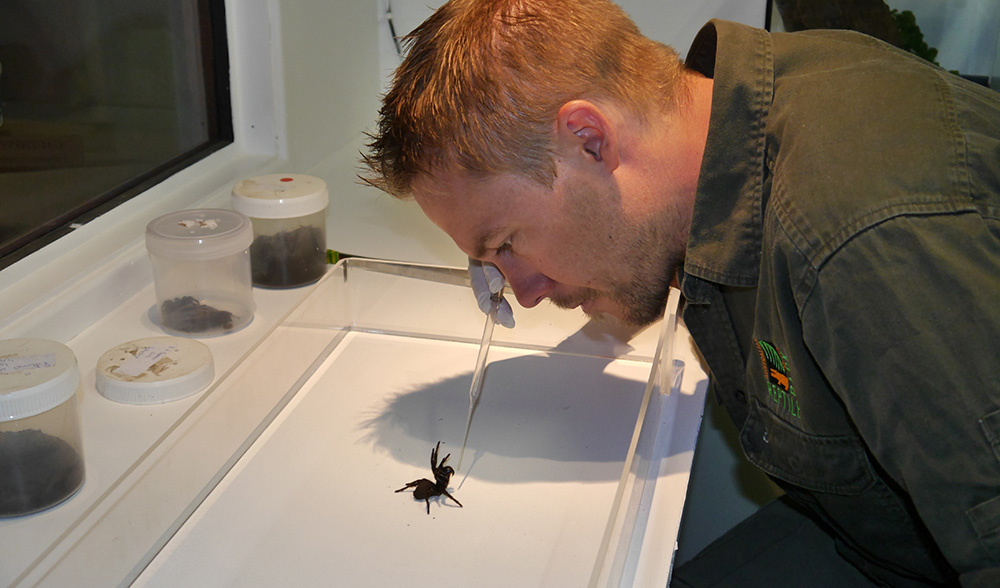
Don’t do what this fellow is doing, he work with spider and have the antivenom aside him for the worst. Besides, he know what he is doing.


Look how cool is this, what gives har name Funnel-web.


Distribution: Sydney, Central Coast and Illawarra regions and west to the Blue Mountains


The kind of spiders who receives the name Funnel-Web are tree.
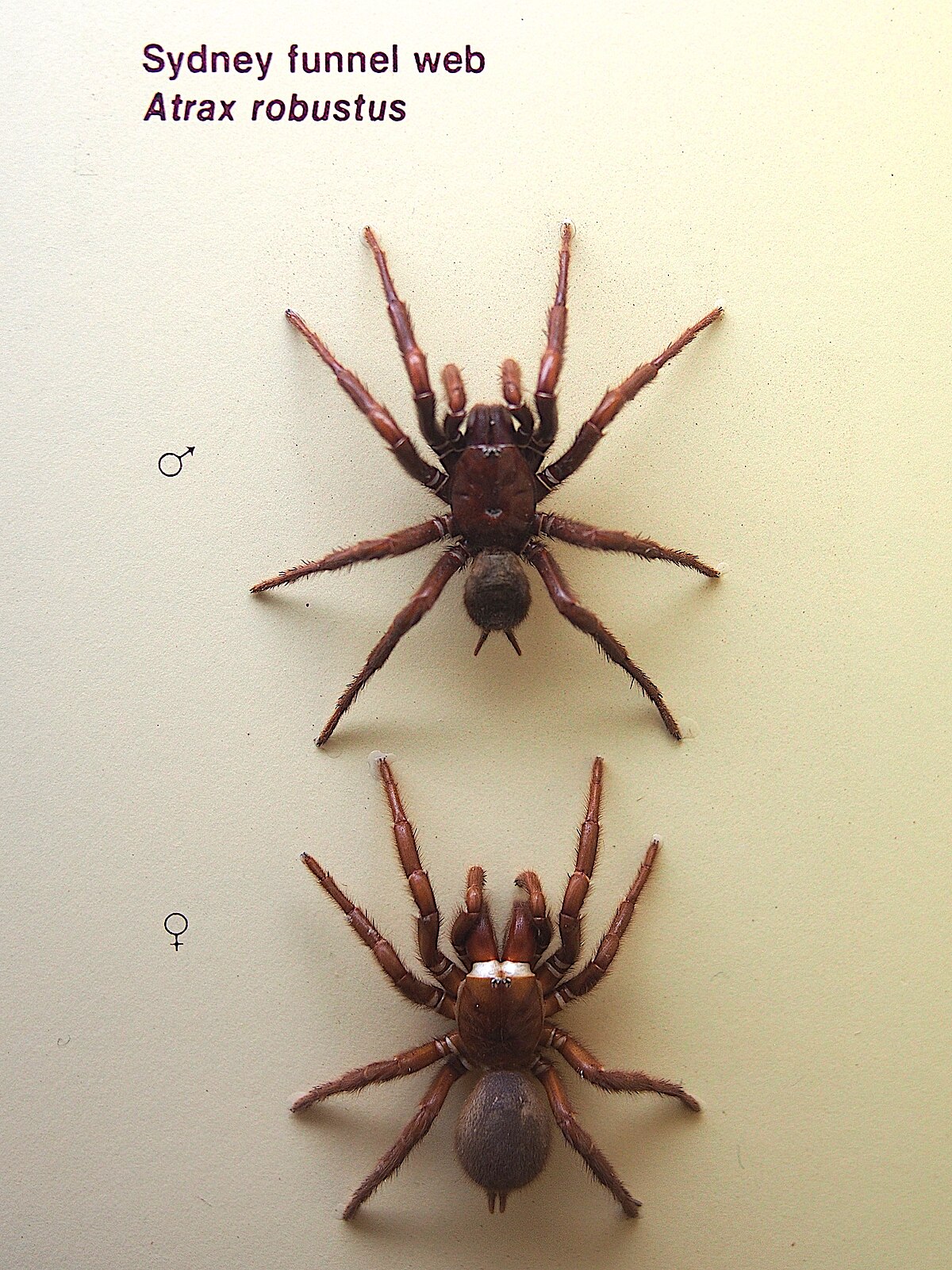
  • The Sydney Funnel-Web Spider (Atrax robustus) is a ground dweller in moist soil areas along much of the eastern coastal area of New South Wales and Victoria.
  • The Blue Mountains Funnel-Web Spider (Hadronyche versuta) is found mainly in the Blue Mountains area, as far west as the Bathurst - Orange region and occasionally in the Sydney basin.
  • The Northern Tree Funnel-Web Spider (Hadronyche formidabili) is found in south-eastern Queensland and northern New South Wales as far south as the Hunter Valley region.


And this treplet need to be feard. All them have that chance of killing you in 15 minutes. But don’t worry so much if you see one, they want to eat their prey (such as beetles, cockroaches, small lizards or snails,) and probably will ignore you. Unless you make them feel treathen, then they start to consider about biting you. So, keep your distance.


Anothar interisting fact is that they have rearward-facing fangs capable of piercing through fingernails.


Kingdom> Animalia
Phylum> Arthropoda
Subphylom> Chelicerata
Class> Arachnida
Order> Aranea
Infraorder> Mygalomorphae
Family> Hexathelidae
Subfamily> Atracinae
Genus> Atrax


~Catch you later!


References:
https://australianmuseum.net.au/sydney-funnel-web-spider
https://en.wikipedia.org/wiki/Sydney_funnel-web_spider
https://en.wikipedia.org/wiki/Australian_funnel-web_spider
https://en.wikipedia.org/wiki/Atrax
http://www.spiders.com.au/funnel-web-spider.html
http://www.australiangeographic.com.au/topics/wildlife/2017/02/worlds-deadliest-spider-the-sydney-funnel-web
https://australianmuseum.net.au/uploads/journals/19162/1556_complete.pdf


R. Gray, Michael. (2010). A Revision of the Australian Funnel-web Spiders (Hexathelidae: Atracinae). Records of the Australian Museum. 62. 285-392. 10.3853/j.0067-1975.62.2010.1556.